

What Not to Do When Ironing?
Did you know that, according to a 2024 Which? survey of 1,000 members, 26% of people don’t iron because they simply don’t like it, and a 2023 Lakeland Trends Report found that 30% of 18–34-year-olds don’t even own an iron? The mounting pile of laundry remains a daunting task that many would rather avoid altogether!
Is there a better alternative to ironing? We say yes, as we offer a complete ironing service at Love2Laundry, which means you never have to pick up that dreaded household accessory ever again! But if you still prefer to iron at home, or like a mix of both, these tips will be super handy.
Quick Answer: The biggest ironing mistakes come down to a few key errors: using the wrong heat setting for the fabric, ironing clothes that aren’t fully clean, and running a dirty iron across an unpadded surface. Avoid these pitfalls, and you’re already ahead of most. Read on for the full list of ten things not to do when ironing.
What Equipment Do I Need for Ironing at Home?
Before diving into the world of creased clothing and darts that need to be ironed back into tricky items, it’s important to consider what tools you need for the job.
Have you ever heard the saying that a workman is only as good as their tools? To a certain extent, that is the case for ironing, as using the proper products will make the task much easier to tackle. Before you start to iron, you will need to have the following:
- A good quality iron that is full size and features various heat settings so that each garment can be treated individually.
- A sturdy ironing board with a thick cover and padding ensures a smooth surface.
- A water sprayer.
- Ironing water or fabric conditioner spray.
Top Ironing Mistakes to Avoid
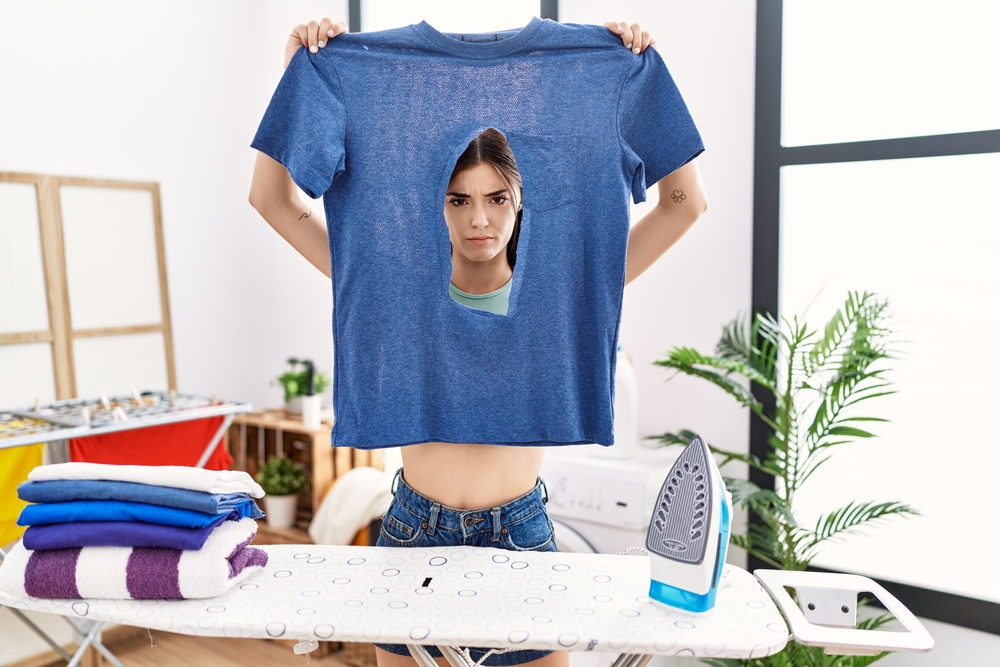
Now for the reason that you are here: what ironing mistakes NOT to make when ironing laundry! Here are our top ten things that you should never do.
- Not emptying the water after using the iron.
Leaving water sitting in your iron between uses can cause limescale to build up inside, which then transfers onto your clothing as stains or white residue. Over time, it can also clog the steam vents and reduce how well your iron performs.
- Ironing fabrics that are too dry. It will be a much harder task and you could damage the garments.
A common ironing mistake to avoid is ironing clothes when they are dry. It is a misconception that garments must be completely dry before ironing. If the fabric is too dry, there is a higher chance of burn marks and irreparable damage. This is why it’s recommended to keep a spray bottle close by and to use the steam function on your iron, as a little dampness loosens tough creases and reduces the heat needed.
- Using hard or untreated water if you live in a chalky water area.
If this is the case, it is always best to use fabric ironing water, as it eliminates the chance of new dirt being ironed into your items. If you use hard water, you will find that your clothing will be slightly rougher to the touch, which no one wants.
- Ironing items without an ironing board cover or on another random surface.
We know it can be tempting to quickly use the kitchen surface when you are in a rush, but your clothing will tell that tale all day long if you do. Ironing items without a padded board can lead to long-lasting creases and even damage to the underneath surface.
- Wearing clothing too quickly.
You should never put on freshly ironed clothes immediately; the fabric is at its most delicate when warm. If you stretch it out of shape, you could end up with a misshapen garment permanently. Leave your items long enough to cool down, and the freshly ironed finish will last much longer.
- Not planning the order in which you tackle the pile of ironing.
A mistake many people make is ironing things in no particular order. Understanding ironing heat settings by fabric is key here. Using the wrong heat can cause damage, and you could extend the task even further if you need to wait for the iron to cool before moving to a delicate item. Sort your laundry into piles before you start, and work from delicate to more robust fabrics.
- Letting your iron get grubby over time.
This might sound simple, but you would be surprised by how many people don’t clean their iron.
If you let dirt build up, this will transfer to clothing items and, in the worst cases, leave a permanent stain that is embedded into the fabric.
- Not using the mist function on your iron.
Another way to add dampness to your clothing is by using the mist function on the iron. This also means you can use a lower heat setting with the same effects, a great tip for ironing clothes and keeping garments in great condition without damaging them.
- Not checking that items are 100% clean before you start to iron them.
Hard to treat stains: red wine after a night out, food stains from a teething baby, or even muddy paw prints.
If these are not properly removed before you iron the clothing post-wash, you may find yourself inadvertently locking in the unwanted design forever. Check that items are completely clean and ready to be finished before you iron them.
- Ironing clothing using circular motions.
Last but not least is the way that you iron. Most people assume circular motions are fine, but they can actually cause the fabric to strain over time. As part of knowing what not to do when ironing, always use an up-and-down motion that follows the natural flow of the stitching and fabric fibres.
Check the Ironing Symbol First
Always check the garment label before you iron. The care label takes priority over general fabric advice. It tells you the exact heat setting that is safe for that item.
- A single dot means low heat.
- Two dots mean medium heat.
- Three dots mean the fabric can handle high heat.
- A cross through the iron symbol means do not iron at all.
Following the label protects your clothes from heat damage. It is the simplest step, but it is one of the most overlooked.
Is There an Alternative to Ironing at Home?
After reading this long list, you may be thinking just how much more complex ironing seems than it did before. Fear not, as there is an alternative. Simply send your ironing to the experts, and you never have to worry about making one of these rookie errors!
While laundrettes generally do not offer ironing services, most laundry services include ironing as an extra service.
The ironing experts know the above list inside out, so never make any of the mistakes we have included. They are also brilliant at treating delicate items or large household fabrics, which can be daunting for the humble at-home iron!
Other benefits include the following:
Affordable
With single items starting from just £1.90 or the option to just fill a bag available, you can benefit from brilliant value for money. Yes, this is a nice thing, but when you think about the time you would save by outsourcing the task, we think it’s very easy to justify. Find out more about how much ironing services cost here.
Suits Busy Lifestyles
Find yourself low on time? Outsourcing ironing is brilliant if you have a busy life, as it removes something else to think about from your life. Simply book your recurring slot and we do the rest for you.
Great for Households
Ironing services also work well if you have multiple people living together. Whether a family or house-share, you can all split the cost and benefit from professionally ironed items.
Ready To Say Goodbye To The Iron?
The Love2Laundry ironing services near you can make your life so much easier.
No more mounting piles of laundry or damaged items due to home ironing errors. We do the work for you. However, if you do want to keep ironing at home or have the odd item to treat, just make sure you follow our top tips.
To find out more about our ironing services, click here.
FAQs
Is it better to iron clothes when they are slightly damp?
Yes, ironing slightly damp clothes is much easier and more effective. Completely dry fabric is harder to smooth and more prone to burn marks. Use a spray bottle or your iron’s steam function to add a little moisture before you begin.
Should you iron directly over zips and buttons?
No, never iron directly over zips or buttons, as the heat can warp or damage them. Instead, iron around them carefully, or turn the garment inside out to protect the hardware while still removing creases from the fabric.
Why should freshly ironed clothes be left to cool before wearing?
Fabric is at its most delicate when warm, making it easier to stretch out of shape. Putting on freshly ironed clothes straight away risks permanently misshaping the garment. Give items a few minutes to cool, and the finish will last much longer.
What heat setting should you use for different types of fabric?
Always check the care label before ironing. Delicate fabrics like silk need a low heat, wool and synthetics a medium setting, while cotton and linen can handle higher temperatures. Working from the lowest to the highest heat setting protects all your garments.