


Do Dry Cleaners Do Steam Ironing?
Yes, many dry cleaners do offer steam ironing as part of their finishing process. However, this service is not always included by default and may come at an extra cost depending on the provider.
Suppose you have ever wondered whether dry-cleaned clothes come out of the machine perfectly pressed and crease-free; the answer is no. The cleaning and the finishing are two separate steps. Whether your garment gets steamed or pressed after cleaning depends on the dry cleaner you choose and the service you pay for.
If ironing is a chore you would rather skip, you are not alone. 30% of people say they strongly dislike ironing. Handing the job to a professional is a practical option, but it helps to know what is actually included in the service.
Continue reading to find out how dry cleaners treat wrinkles, what tools they use, and what to ask before you drop off your clothes.
Quick Answer: Yes, many dry cleaners offer steam ironing as a finishing service. It is not always included in the standard dry cleaning price and may be charged separately. The availability of this service varies by provider, so it is worth confirming with your dry cleaner before booking.
Why Do Dry Cleaned Items Need to Be Ironed?
Dry cleaning is a process that uses a liquid solvent to freshen up, remove dirt and eliminate stains without water. The solvents are used to target specific cleaning needs without needing water to activate them. Instead, items are placed inside a professional dry cleaning machine, which essentially agitates them to get the solutions working.
Just like home washing machines, dry cleaning machines use a spinning motion combined with different heat exposures. This is dictated by the types of materials being cleaned and the aspects being treated. Furthermore, dry cleaning also requires the same sorting process as normal washing machines do, ensuring all items in a load are safe to use the same heat and solvents.
Once the items have gone through the dry cleaning machine, they are often left wrinkled and crumpled. Just think how many creases your holiday packing normally has when you arrive. This is because the items are dry, folded, and moved around. Dry cleaning has the same results as clothing that has been moved around and often tangled with others.
To get rid of the creases and lock in the dry cleaning goodness, a steam iron is one of the common tools reached for by dry cleaning experts.
Are Steam Irons Used by Dry Cleaners?
Yes, they are. Steam ironing at dry cleaners is a standard part of the finishing process, and the equipment used is a step above anything you would find at home.
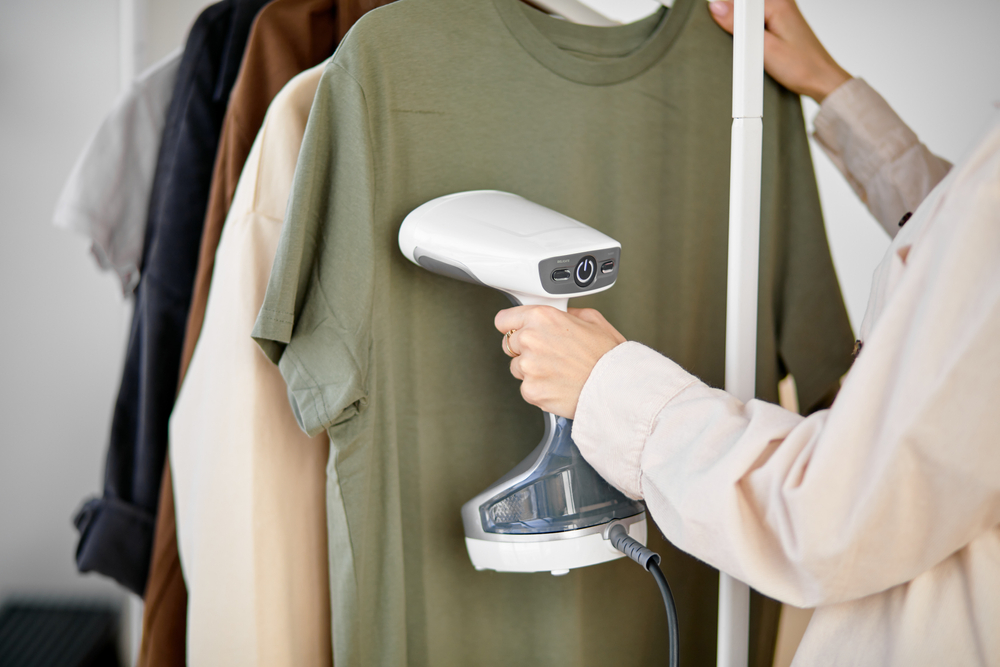
Professional dry cleaners use a range of tools to remove wrinkles and restore the shape of garments. These include industrial ironing tables, handheld steamers, and ironing presses. Each piece of equipment is built for professional garment pressing, offering precise control over heat and steam levels to suit different fabric types.
This matters because dry cleaning and ironing are not the same step. Cleaning removes dirt and stains, but the process can leave fabrics looking crumpled. Finishing with steam or a press is what gives garments that sharp, clean look.
Bonus read: Wondering what it costs to have a suit professionally cleaned? Here is a full guide on suit dry cleaning costs.
Do dry cleaners press clothes? Most do, though the extent of the finishing work can vary. Skilled dry cleaners know how to handle delicate items carefully, reducing the risk of heat damage on fabrics that require extra care. If you are wondering whether dry cleaners can iron suits, the answer is yes. Suits in particular benefit from professional pressing, which restores structure and smooths out creases far more effectively than a standard home iron.
Steam Iron vs Steam Press vs Garment Steamer
Dry cleaners use different finishing tools depending on the garment type and the result needed. Here is a quick breakdown of the three most common options.
| Equipment | How It Works | Best Used For |
| Steam Iron | Applies direct heat and steam to fabric laid flat on an ironing board, with the user guiding the iron across the surface. | Cotton and linen shirts, everyday garments, items that need a crisp, flat finish. |
| Steam Press | Uses two heated plates to press fabric with even, consistent pressure across a larger surface area in a single motion. | Shirts, trousers, bed linen, and flat garments that need a sharp, uniform result quickly. |
| Garment Steamer | Directs a continuous flow of steam over a hanging garment without direct contact, relaxing fibres gently. | Delicate fabrics, structured pieces such as suits and blazers, and items that cannot tolerate direct heat or pressure. |
There is a place for each tool in the professional finishing setting. An effective dry cleaner will pick the most appropriate tool based on the fabric type and structure of the clothing item and not the other way round.
How Do Steam Irons Treat Wrinkles?
The process starts when the heat reaches into the fibres of the fabric, softening them and allowing the fabric to be remoulded. After obtaining the proper heat temperature, the garment can then be shaped back into its rightful form. The fibres then cool, resetting them to the new form. It involves controlled moisture, just enough to allow the fibres to relax.
With that said, it is important to note that the appropriate temperature and method should be used. Not all fabrics have the same response to heat; some might require more or less than others. While a cotton shirt can be steamed at high heat, the same cannot be done to a silk blouse or wool jacket.
This is one of the key differences when it comes to steaming vs ironing at dry cleaners. Flat irons apply direct, intense heat to the surface of a fabric, which can be too harsh for delicate or structured pieces. Steam reaches the root of the crease more gently, which is why it is the preferred method in professional finishing.
It is also worth noting that steam can help reduce odours and loosen light surface dirt between washes, which adds to its value as a finishing tool across a range of garment types and household items.
Whether steam ironing is included in dry cleaning or offered as a separate finishing step depends on the provider, so it is always worth checking when you book a dry cleaning and ironing service.
What Other Ways Can Be Used to Remove Wrinkles From Dry Cleaned Items?
When considering what substitutes are available for dry cleaning, we also often get asked about other ways to remove wrinkles if a steam iron is not available.
Our top recommendations are as follows:
Use a press machine. We appreciate that households will not have pressing machines, but it is another common method used by dry cleaning experts for materials that are suitable. These use different heat exposures and a predefined plate to ensure the perfect finish can be given to a range of clothing items.
Use heat from around the home. If you find yourself with a wrinkled, dry-clean-only garment at home, don’t panic! Not everyone has a steamer, or the knowledge of how to use one safely for delicate fabrics, but there are a few home hacks that still work.
To treat wrinkles, why not hang your clothing in the bathroom when you are having a well-deserved steamy soak at the end of a long day!
Select a suitable fabric relaxer or garment spray. If items only have a few creases and are unsuitable for heat exposure, try using a mist of water or a fabric finishing spray. This works in the same way that a steamer would be relaxing the fabric fibres to remove the unwanted creasing.
Can All Items Be Steamed Ironed Once They Have Been Dry Cleaned?
Even if you are dealing with the most delicate dry-clean items, we can confirm all can be steamed to remove creases. That is another reason why steam ironing is a chosen method by many people.
However, this still needs to be done easily, so we don’t recommend that dry cleaning occurs at home.
Why Should I Choose Love2Laundry for Dry Cleaning?
Now that you understand how steam ironing fits into the dry cleaning process, here is why Love2Laundry is a reliable choice for both.
Our team is experienced in handling a wide range of garments, from everyday clothing to harder-to-treat items. We know how to approach delicate fabrics and tough stains without causing damage, and our finishing process is a core part of the service we offer.
If you do not need a full dry clean, we also offer standalone ironing and pressing options. A shirt on a hanger starts from £2.75, making it a straightforward option when you just need garments freshened up and pressed.
Pro Tip: You can get an idea of the costs by reading our guide on how much ironing costs per hour in the UK.
We also offer:
- Collection and delivery through our laundry app, with full pricing visibility and flexible time slots.
- Fast turnaround, including next-day options when you need items back quickly.
- Sustainable practices, including electric vehicles in London and modern, efficient machines.
To find out more about our dry cleaning and ironing services, click here.
FAQs
Do dry cleaners finish clothes with ironing after the cleaning process?
Yes. Most dry cleaners iron or press garments as part of the finishing process after cleaning. This step is not always included in the base price, so it is worth confirming with your provider before dropping clothes off.
Does a standard dry cleaning service always include steam pressing?
No, not always. Steam pressing is sometimes offered as a separate finishing service and may come at an extra charge. Always check with your dry cleaner beforehand to confirm exactly what is included in the price.
Can a suit jacket be safely steamed at a dry cleaner’s?
Yes. Dry cleaners can steam suit jackets using professional garment steamers that apply gentle, contactless heat. This restores the jacket’s structure and removes creases without the risk of scorching the fabric or flattening the lapels.
Is steaming a safer method than ironing for delicate fabrics?
Yes. Steaming is generally safer for delicate fabrics as it relaxes fibres without direct contact or intense pressure. Unlike a flat iron, it reduces the risk of heat damage or crushing, making it the preferred choice for fragile garments.

