
How to Iron Jeans at Home (Step-by-Step Guide)
We have all been there: you pull your favourite denim out of the laundry basket, only to find a crumpled, creased mess. Jeans wrinkle easily due to agitation during washing, tight spinning cycles, and improper folding or cramped storage. Denim has a rugged reputation, but many people are unsure whether they should iron it at all. You might wonder if high heat will ruin the fit or fade the colour.
Iron your jeans the right way, and you elevate your casual look without wrecking the fabric. Whether you need to iron blue jeans for a weekend brunch, crisp up a pair of heavy-duty pants, or iron black jeans for a sharp evening outfit, the right technique keeps your denim looking intentional and polished. With a few expert tips, you can safely iron denim jeans at home and keep them looking brand new.
Should You Iron Jeans?
Ironing jeans isn’t strictly necessary, but it can transform your overall look. For a casual day running errands, you can often skip it. However, if you are styling your denim for a smart-casual office environment, a date night, or a formal event, a crisp pair of jeans looks more sophisticated.
The necessity of ironing depends on denim thickness: heavy, raw denim retains deep, stubborn wrinkles that require heat to flatten, whereas lightweight summer denim relaxes more easily. You must be careful to avoid shine marks, which occur when intense, direct heat flattens the cotton fibres, creating an unsightly glossy sheen. For delicate blends or lightly wrinkled pants, a garment steamer is often better and safer than a traditional soleplate.
What You Need Before You Iron a Pair of Jeans
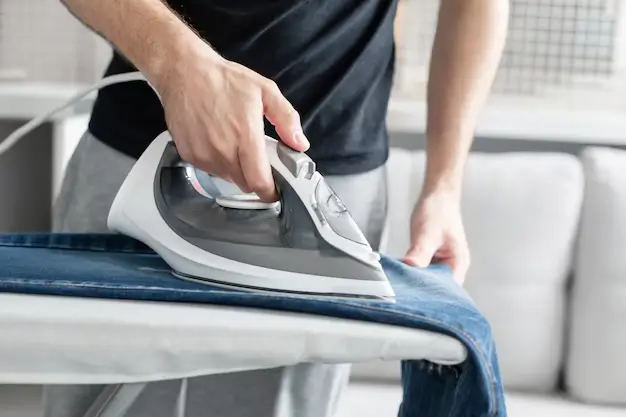
Gather the correct tools beforehand to ensure a smooth process and protect your clothing from accidental heat damage. Keep things simple, practical, and close at hand.
Essential Tools
- An iron with a functional steam option
- A sturdy, flat ironing board
- A water-filled spray bottle (optional, for stubborn creases)
- A press cloth or a clean, thin cotton cloth
- A sturdy clothing hanger
A press cloth acts as a protective barrier between the hot iron and the delicate denim fibres. By diffusing the direct heat, it prevents the fabric from scorching and eliminates the risk of leaving permanent, ugly shine marks on your waistbands or seams.
Step-by-Step Guide: How to Iron Jeans at Home
Follow this simple, beginner-friendly method to iron jeans without damaging the construction.
Step 1: Check the Care Label
Before applying any heat, look at the care tag inside the waistband. Pay close attention to the heat symbols and fabric blends; traditional 100% cotton can handle higher temperatures, whereas stretch denim contains synthetic materials that require much lower heat to prevent melting.
Step 2: Turn Jeans Inside Out
Flip your denim inside out before placing it on the board. This crucial step protects the fabric’s outer face from direct contact with the iron, preventing fading, preserving the dye, and eliminating superficial shine.
Step 3: Choose the Right Heat Setting
Adjust your appliance settings based on the fabric composition listed on the label. Pure 100% cotton denim thrives in medium to high heat, while stretch denim demands a strict low- to medium-heat setting. Avoid maximum heat, since it can degrade the fabric fast.
Step 4: Lightly Dampen the Fabric
Moisture relaxes stubborn wrinkles far faster than dry heat alone. You can utilise the built-in steam function on your device for continuous moisture, or use a separate spray bottle to lightly mist any deeply creased areas before pressing.
Step 5: Start with the Waistband and Pockets
Begin at the top of the pants by sliding the waistband over the narrow end of the ironing board. Use a firm pressing technique, pressing down and lifting rather than dragging the iron, which can stretch the fabric. Press the pocket linings first, so they lie flat inside.
Step 6: Iron the Legs Section by Section
Lay one leg completely flat along the board, aligning the inseam and outseam. Work your way from the thigh down to the hem using smooth, steady strokes. Be careful to avoid over-pressing seams directly to prevent leaving outer track marks.
Step 7: Hang Immediately
As soon as you finish, hang the denim up using a proper hanger, and allow the fabric to cool completely while hanging; this prevents new wrinkles from forming while the cotton is still warm and pliable.
How to Iron a Crease in Jeans
While modern styles lean casual, some formal styling, Western wear, or vintage aesthetics look incredible with a sharp, distinct line down the front. To iron a crease in jeans, start by laying the pants flat on the board and aligning the inner and outer side seams directly on top of each other.
Once the leg lies flat, the natural centre line will emerge. Use plenty of steam to set the line, then press firmly along the front centre of the leg without sliding the iron around. Let the denim cool completely on the board before moving it to ensure the sharp edge locks in place permanently.
How to Iron Black Jeans Without Fading
Dark pigments are sensitive to heat, making it easy to ruin a dark pair of denim. To iron black jeans without damage, turn them inside out to keep the outer dye safe from direct contact with the soleplate.
Keep your appliance on a low heat setting and place a protective press cloth over the fabric. You should also avoid over-steaming, as excess moisture combined with heat can cause dark dyes to bleed or take on a dull, washed-out appearance.
How to Iron Blue Jeans Properly
The way you treat blue denim depends on its specific shade. There is a noticeable difference between light-wash and dark-wash denim: light washes are more forgiving, while dark indigo washes behave similarly to black jeans and show heat damage quickly.
Focus on keeping the motion fluid to avoid shine and colour distortion, which can leave permanent, pale streaks across the lap and knees of your favourite pants.
How to Iron Denim Jeans with Stretch Safely
Stretch denim requires a different approach because it contains synthetic elastic fibres. Denim jeans with elastane or spandex blends need extra caution around extreme heat, which can snap the elastic fibres and leave your pants permanently baggy. Use low heat only, avoid holding the iron in any single spot for too long, and skip extreme steam settings that can warp the stretch material.
How to Iron Wrangler Jeans and Heavy Denim
Thicker, rugged workwear, like a pair of Wrangler jeans, needs a bit more muscle to look smooth. Heavy denim can take a slightly higher heat setting, provided it’s made of 100% cotton, along with plenty of steam to penetrate the dense fibres. Focus on the stubborn creases around the pockets, thick seams, and heavy stitching typical of classic workwear denim.
How to Do Iron-On Patches on Jeans
You can add personal flair or repair a tear easily once you know how to apply iron-on patches to denim safely. Follow these steps:
- Preheat your iron to the temperature recommended on the patch package, and use no steam.
- Place the patch over the desired area while the jeans lie flat.
- Cover the design completely using a piece of parchment paper or a thin cotton cloth to protect the embroidery.
- Press firmly straight down for 20–30 seconds without moving the iron side to side.
- Let the area cool completely before moving the garment to allow the adhesive to bond permanently.
Common Mistakes to Avoid When Ironing Jeans
- Using high heat on synthetic or blended denim fabrics.
- Ironing directly on the face of dark denim, which creates permanent shiny streaks.
- Skipping the inside-out step, which leaves the outer dye vulnerable to scorching.
- Over-ironing one specific area for too long, which weakens the cotton fibres.
- Storing or folding the jeans immediately while they are still warm and damp.
How to Make Your Jeans Last Longer
To maximise the lifespan of your favourite denim, you need to change how you wash it. Wash jeans the right way to avoid shrinking them: use cold water, a gentle cycle, and skip the heated clothes dryer. Avoid washing your denim after every wear; instead, spot-clean small stains and air them out between uses to preserve the shape, elastic integrity, and rich dye colours.
Alternatives to Ironing Jeans
If you are short on time or travelling without an appliance, you can still get rid of wrinkles without an iron. Hang your jeans in the bathroom while you take a hot, steaming shower, and the ambient steam relaxes the cotton fibres. Alternatively, you can use a high-quality commercial wrinkle-releaser spray, gently tug the fabric smooth, and hang it up to air-dry for a quick refresh.
When to Choose Love2Laundry for Professional Ironing
Some garments are better left to the experts. Premium designer denim, expensive raw denim, and heavily creased workwear all benefit from professional finishing equipment that goes beyond what a home iron can achieve. If you have a growing laundry pile, bulk ironing services save significant time without the risk of heat damage.
Love2Laundry provides professional ironing and garment care across London, Manchester, Birmingham, Oxford, and beyond, collected from your door and returned within 48 hours, pressed and ready to hang. Every vehicle behind that collection and delivery service, including those run by our contractors and subcontractors, has been fully electric since we founded the business in 2014. Our finishing equipment includes industrial steam systems that set creases and smooth fibres more effectively than any domestic iron, with no risk of shine marks or fabric damage.
Check our ironing prices online and book through our app in seconds.
FAQs – How to Iron Jeans
Can you iron jeans without damaging them?
Yes, you can safely iron denim by turning the garment inside out and selecting the appropriate heat setting for the fabric blend.
Should you iron jeans inside out?
Yes, ironing denim inside out protects the outer fibres from friction, prevents colour fading, and eliminates unsightly heat-shine marks.
How do you properly iron a crease in jeans?
Align the inseams and outseams flat on the board, use heavy steam, and press firmly along the straight centre line.
Conclusion
Ironing jeans well is a simple skill that keeps your casual and formal wardrobe looking sharp. By taking a few moments to check the care label, flipping your trousers inside out, and selecting the correct heat setting for your fabric blend, you can eliminate stubborn wrinkles without damaging the colour or texture.
Whether you are maintaining deep indigo shades, handling heavy workwear, or smoothing out flexible stretch fabrics, the techniques above help your denim keep its shape and crisp appearance.
If time is short, or your wardrobe demands specialised expert care, a professional service like Love2Laundry gives your clothes premium treatment, leaving you with crisp, immaculate jeans.