


Professional Duvet Cleaning vs Washing at Home: Which Is Better for Autumn?
Professional duvet cleaning vs washing at home comes down to your duvet’s care label, size and drying needs. Washing at home can cost less if your machine has enough room and you can dry it fully, while professional cleaning may suit bulky, delicate or hard-to-dry duvets better.
As autumn arrives, the summer duvet goes back in the cupboard, and the warmer one is coming out. With it comes another question rearing its head: professional duvet cleaning vs washing at home?
Our honest answer! Neither option is best for every duvet. Washing it at home can save money, but only if you have the right equipment and enough time to do the job properly. The right choice depends on its care label, filling, washing machine capacity and whether you can dry it properly.
This guide compares both options, explains what to check before washing your duvet at home, and helps you decide when professional cleaning may be worth it.
Snapshot: Do It Yourself or Hire a Pro?
Wash your duvet at home if:
- The care label allows machine washing.
- Your washing machine has enough room for it.
- You have enough time and space to dry it fully.
Choose professional duvet cleaning if:
- The label says Dry Clean Only.
- Your duvet is too big for your washing machine.
- You cannot dry it fully at home.
- You are unsure how to clean its filling safely.
Still unsure? Check the care label first. It will help you choose the right cleaning method. If home washing is allowed and you can dry your duvet properly, you may not need a professional service. Otherwise, professional cleaning may be a better option.
Why Can Autumn Make Washing a Duvet at Home Harder?
The hardest part of washing a duvet in autumn is often getting it fully dry. Duvets are thick, heavy and bulky, so they can take a long time to dry. When the weather gets colder and wetter, drying them outside becomes harder too.
Drying your duvet indoors may seem like an easy answer, but you need enough space and fresh air moving through the room. A wet duvet adds moisture to the air. If the room cannot clear that moisture, it can lead to damp patches and mould. Oxford City Council explains how to prevent damp and mould when drying clothes indoors.
You should also avoid placing your duvet directly over a heater to speed up drying. It can block heat from spreading around the room, and covering portable heaters with bedding can create a fire risk.
Before you wash your duvet this autumn, check these four things:
- Check the care label: Make sure you know how to clean your duvet safely.
- Check your washing machine: Your duvet needs enough room to move during the wash.
- Plan the drying: Make sure you have enough space and time to dry it fully.
- Store it only when dry: If you are putting your summer duvet away, make sure no dampness remains inside.
If you do not have enough room or time to wash and dry your duvet properly, professional cleaning may be an easier option. First, though, let’s look at what your duvet’s care label and filling can tell you.
What Should You Check Before Washing Your Duvet at Home?
Before washing your duvet, check three things: its care label, its filling and the size of your washing machine. You should also think about how you will dry it afterwards. These checks can help you avoid damaging your duvet or leaving it damp inside.
Does Your Duvet Care Label Allow Machine Washing?
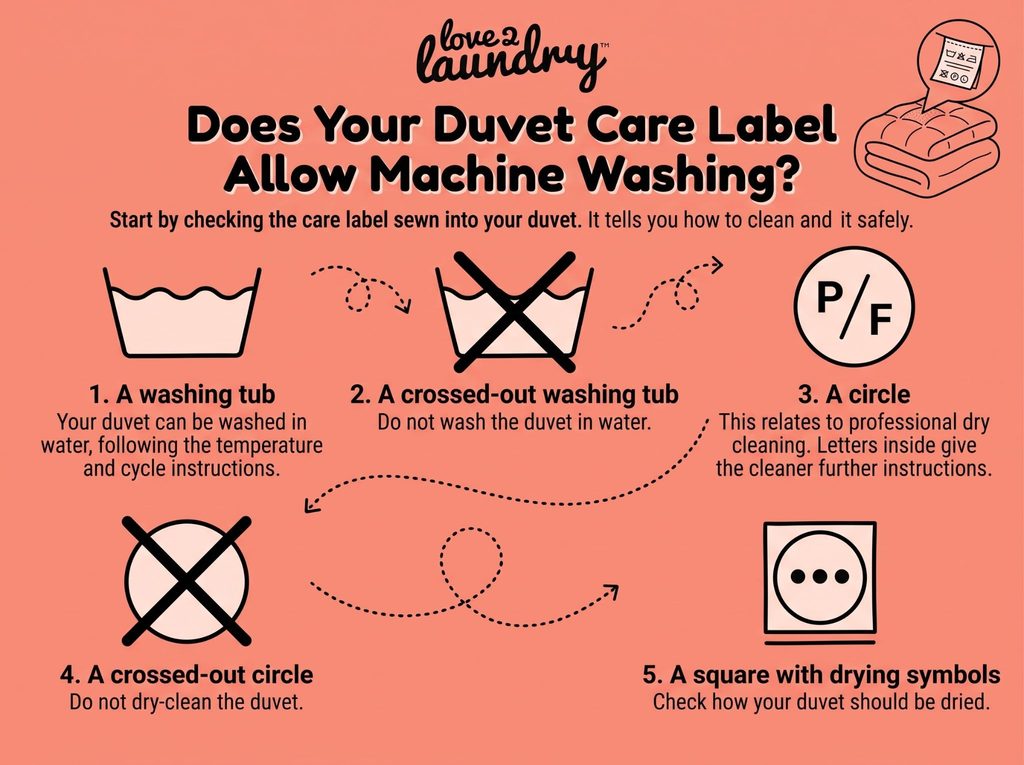
Start by checking the care label sewn into your duvet. It tells you how to clean and dry it safely.
Look for these symbols:
- A washing tub: Your duvet can be washed in water, following the temperature and cycle instructions.
- A crossed-out washing tub: Do not wash the duvet in water.
- A circle: This relates to professional dry cleaning. Any letters inside it give the cleaner further instructions.
- A crossed-out circle: Do not dry-clean the duvet.
- A square with drying symbols: Check how your duvet should be dried.
If the label says Dry Clean Only, do not put your duvet in the washing machine. If you cannot understand the symbols, our guide to understanding laundry symbols can help.
Which Duvet Fillings Can You Wash at Home?
Your duvet’s filling makes a difference to how you clean it. Some are easier to wash at home, while others need extra care.
| Duvet filling | Can you wash it at home? | Main concern |
| Synthetic | Usually, if the care label allows it | It needs enough room to wash and dry properly |
| Feather | Possible if the care label allows it | The feathers may clump if the duvet is not dried fully |
| Down | Some can be washed at home if the label allows it | Trapped moisture and clumping can affect the filling |
| Wool | Check the care label carefully | The wrong washing or drying method may damage the filling |
| Silk | Check the manufacturer’s instructions; some need specialist cleaning | Delicate fibres may be damaged by the wrong cleaning method |
Do not choose a cleaning method based on the filling alone. Follow the care label, as instructions can vary between duvets.
Will Your Duvet Fit in Your Washing Machine?
Even if your duvet is machine-washable, your washing machine may be too small for it.
Your duvet needs enough room to move during the wash. If it fills the drum completely, water and detergent may not pass through it properly. This can leave parts of the duvet poorly cleaned or rinsed.
According to Which?’s advice on washing duvets, you should only put your duvet in the machine when there is enough space inside the drum.
Do not force a large duvet into a small machine. Check your washing machine manual and the duvet manufacturer’s advice. If it does not fit comfortably, a larger machine or professional cleaning may be a better option.
Can You Dry Your Duvet Fully at Home?
Washing is only half the job. Your duvet must also dry fully, including the filling inside.
Check if your tumble dryer can take the duvet and whether the care label allows tumble drying. If you plan to air-dry it, make sure you have enough space, good airflow and enough time. Thick duvets can take a long time to dry, especially in cold or wet weather in autumn.
Never put a duvet back on your bed or store it while it is still damp. Trapped moisture can cause a musty smell and encourage mould to grow.
If your duvet fits the machine and you have a safe way to dry it, home washing may work well. If you are unsure how to wash it safely, read our step-by-step guide to washing a duvet at home. It explains how to clean your duvet while reducing the risk of damage.
Home Washing vs Professional Duvet Cleaning: What Are the Trade-Offs?
If your duvet can be washed at home, you still have another decision to make. Is doing it yourself worth the time and effort, or would you rather pay someone to handle the job? Both options have benefits, but each comes with a trade-off.
| What to consider | Washing at Home | Professional Duvet Cleaning |
| The real cost | It may cost less if you already have the right equipment. However, repeated tumble-dryer use or a trip to a launderette can add to the cost. | You pay upfront for the service. But this becomes an investment in the longevity of your duvet. |
| Your time | You do the work yourself, including moving the duvet, managing the wash and checking the result. | You spend less time doing laundry, and with Love2Laundry you don’t need to worry about collection. |
| Control over the process | You choose the detergent, wash cycle and timing. You are also responsible for following the care instructions correctly. | The cleaner handles the process. You need to share any special instructions and check that the service can care for your duvet. |
| Dealing with stains | You can treat a fresh stain as soon as you notice it, provided the care label allows it. | You can point out stains before cleaning so the team can assess them. However, some stains may not come out completely. |
| The work afterwards | You handle the final checks and make sure the duvet is ready to use or store. | You avoid most of the work yourself. The duvet returns ready to use or store. |
So, which option makes more sense? Home washing may suit you if you want to keep costs down and do not mind the extra work. Professional cleaning may be worth paying for if you value convenience or would rather leave a bulky laundry job to someone else.
The choice is not always about which method cleans better. It is also about how much time, effort and responsibility you want to take on.
Need Professional Help With Your Duvet?
If washing your duvet at home feels like too much work, Love2Laundry offers a convenient alternative. We provide professional duvet cleaning with pickup and delivery, so you do not have to carry bulky bedding to a shop.
The right cleaning method matters too. Depending on your duvet’s care label and filling, we can help you choose a suitable option, including wet cleaning or dry cleaning. Our bedding service aims to return your duvet within 72 hours, so you can get it ready for the colder nights without the hassle of washing and drying it yourself.
We also care about how we clean. Our energy-efficient machines and carefully planned wash loads help us use water and energy more wisely. We use efficient detergents and cleaning methods to clean clothing items. Our London pickup and delivery fleet uses electric vehicles, helping reduce pollution on the road.
Want to check the cost before booking? You can view our duvet cleaning prices to find the price for your duvet type and size. Free pickup and delivery are available when your order meets the minimum value for your area or £20.00, with an added £1.99 service charge.
For more details about our service, read our guide to duvet cleaning in London with free pickup and delivery.
Ready to leave the hard work to us? Book your pickup online or through the Love2Laundry app.
FAQs About Washing a Duvet at Home vs Professional Cleaning
Can you tumble-dry every type of duvet?
No. Check the care label before using a tumble dryer. Some duvets need low heat, while others must air-dry. Always follow the label to avoid damaging the filling.
How can you tell if a duvet is dry inside?
Feel the thickest parts and corners for damp spots. Check for cold, wet areas or clumps in the filling. Let your duvet dry fully before putting it back on your bed or storing it.
Why does a duvet smell musty after washing?
A musty smell often means moisture is trapped inside the filling. Let the duvet dry fully using a suitable method. If the smell remains, check your washing machine and care label before washing it again.
Does professional duvet cleaning always mean dry cleaning?
No. Some duvets can be washed with water in suitable commercial machines, while others need dry cleaning or specialist care. Always follow the care label and check which methods the cleaner offers for your duvet.
Choose the Right Way to Clean Your Duvet This Autumn
As the colder nights arrive, it’s time to get your warmer duvet ready. If your duvet can go in the washing machine and you have enough space to dry it, washing it at home may be fine. But if it’s too big for your machine or takes too long to dry, professional duvet cleaning may be the easier choice.
Love2Laundry makes duvet cleaning simple with pickup and delivery to your door. You don’t need to carry your bulky duvet to a shop or worry about drying it at home. If you decide that professional cleaning is right for you, Love2Laundry makes it easy to arrange pickup and delivery.

