


How Much Does One Wash Cost in Electricity?
In terms of laundry, it is not uncommon to be totally unaware that the use of your washing machine and tumble dryer is secretly increasing your bill for power consumption each time you do your laundry. The reason for this is that households using the Standard Variable Tariff are charged 26.32p per kWh of electricity, according to Ofgem.
How much does one wash cost in electricity? If you want to get a better idea of how much you are spending on power in your home or how to save energy, figuring out the cost of washing clothes can be a good starting point.
That depends on a few factors, for example:
- the washing machine model
- the energy rating of the washing machine
- the wash cycle length
- the water temperature
- how long the appliances are on standby (as this adds to your electricity bill)
Quick Answer: A washing machine usually costs about 11p to 21p for one wash. The exact cost depends on your machine, wash setting, and electricity price. From October to December 2026, the average Ofgem electricity price is 26.32p per kWh.
How Much Electricity Does a Washing Machine Use Per Cycle?
How much electricity does a washing machine use? It depends on the machine and the wash programme. Your washing machine’s energy label shows how much electricity it uses in kWh per 100 cycles. This makes it easier to work out the cost of one wash.
From 1 October to 31 December 2026, the average Ofgem electricity rate for customers on a standard variable tariff paying by Direct Debit is 26.32p per kWh. Your own rate may be different depending on your tariff.
For example, a machine that uses 50 kWh for 100 washes uses about 0.5 kWh for one wash. At 26.32p per kWh, that costs about 13p.
| Energy Used for 100 Washes | Electricity for 1 Wash | Approx. Cost for 1 Wash |
| 40 kWh | 0.4 kWh | 11p |
| 50 kWh | 0.5 kWh | 13p |
| 60 kWh | 0.6 kWh | 16p |
| 70 kWh | 0.7 kWh | 18p |
These figures use the Ofgem rate of 26.32p per kWh for 1 October to 31 December 2026. Your actual cost may be different.
How Many kWh Does a Washer Use?
To find out how many kWh a washer uses, check the energy label on your machine. If it says 50 kWh per 100 cycles, divide 50 by 100. This means one wash uses about 0.5 kWh.
The A to G energy rating can help you compare washing machines, but the kWh figure tells you more about how much electricity a machine uses.
How Many Watts Is a Washing Machine?
Washing machines can use different amounts of power, so there is no single watt figure for every machine. Check the rating plate or the machine manual to find out how many watts your washing machine uses.
The rating plate is usually found on the back or side of the machine. Look for a number followed by W, such as 1,500W or 2,000W. This tells you the machine’s power rating.
You may also find this information on the manufacturer’s website by searching for your washing machine model.
Keep in mind that the watt figure shows the machine’s power rating, not the total electricity used during one wash. For running costs, the kWh figure is more useful.
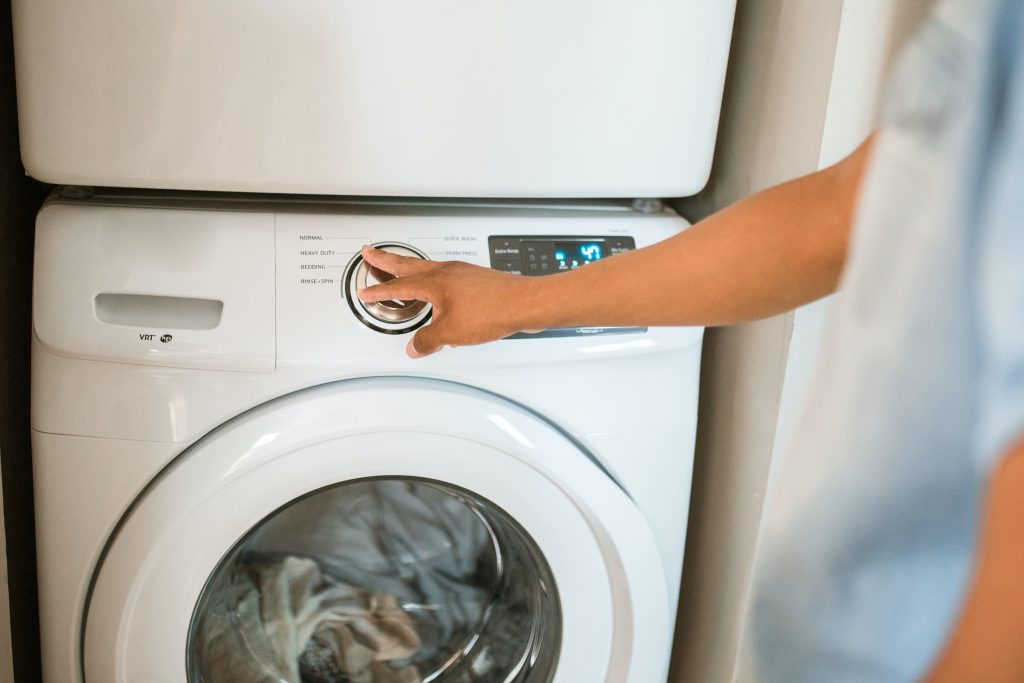
Is it cheaper to wash clothes at a lower temperature?
Yes. Washing clothes at a lower temperature usually uses less electricity because the machine does not need to heat the water as much.
According to the Energy Saving Trust, lower wash temperatures use significantly less energy. A 30°C wash can use around 40% less energy than a 40°C wash on the same machine.
The amount of money you save depends on your washing machine, how often you wash and the electricity rate you pay. For clothes that are not heavily soiled, 30°C can be a simple way to reduce energy use.
Tips to Reduce Your Cost per Wash
- Wash at 30°C: Lower temperatures usually use less electricity because the machine does not need to heat the water as much.
- Always run full loads: Washing full loads means you do fewer cycles and use less electricity overall.
- Choose the right programme: Use a shorter programme for lightly soiled clothes and an Eco programme when it suits the load.
- Avoid standby time: Leaving your machine on standby still draws power and quietly adds to your bill.
How can I save on my electricity and energy bills when doing laundry?
Follow these tips to reduce your laundry running costs:
- Pre-treat stubborn stains before washing. Heavily soiled clothes require a hotter, more powerful wash, which means more electricity used per cycle.
- Always wash a full load. Running the machine when it’s half full is a waste of energy and water. Don’t start the cycle unless your laundry basket is full. If you’re not sure what constitutes a full load of laundry, please refer to the following guidelines for 6 kg of laundry.
- Wash at a lower temperature. Cold or 30°C washes use significantly less energy than hot cycles. For lightly soiled clothes, there’s rarely a reason to go higher. See our guide on the ideal temperature for a cold wash.
- Check your wash cycle length. Longer cycles on high heat settings cost more. Use the shortest appropriate cycle for the load.
- Use a drying rack or outdoor washing line instead of a tumble dryer wherever possible; more on this below.
- Buy energy monitoring plugs to track exactly how much electricity your washing machine and other appliances are drawing.
- Outsource laundry when it makes sense. Using a professional laundry service occasionally means running your own machines less, which reduces wear and your utility bills.
- Clean your machine regularly. Fluff, dust, and limescale accumulate to decrease efficiency. For instance, malfunctioning sensors will make the drum revolve and stop repeatedly, thereby prolonging both cycle time and energy consumption.
Don’t Forget the Tumble Dryer
The type of dryer makes a big difference to tumble dryer cost per cycle. Heat-pump dryers usually use much less electricity than older condenser and vented models. Current UK testing shows large differences in running costs between these dryer types.
As a simple example, a dryer using 4.5 kWh per cycle would cost about £1.18 per load at the Ofgem electricity rate of 26.32p per kWh. Four loads a week would cost around £4.74 a week, or about £246 a year.
Your own cost may be much lower or higher, so check the energy information for your dryer. Whenever the weather allows, drying clothes outside on a washing line uses no electricity and can help reduce your laundry costs.
What a Week and Month of Laundry Actually Costs
Now for a total summary of what the laundry cost per week in monetary terms looks like. Now you can see how quickly the cost of laundry can add up. For this example, we are using a washing machine that uses 0.63 kWh per wash and a tumble dryer that uses 4.5 kWh per cycle. Taking into account the current Ofgem rate of 26.32p/kWh and knowing how much one wash costs in electricity at each stage:
| Cost per Cycle | 4x per Week | Per Month (approx.) | |
| Washing machine | ~17p | ~67p | ~£2.90 |
| Tumble dryer | ~£1.18 | ~£4.74 | ~£20.50 |
| Total | ~£1.35 | ~£5.41 | ~£23.40 |
These are example costs. Your actual cost depends on your machine, programme and electricity tariff.
The washing machine usually costs much less to run than the tumble dryer. This is why drying your clothes on a rack or washing line when possible can help reduce your laundry electricity costs.

Where can I find a professional laundry company?
If you’d rather skip the laundry costs altogether, outsourcing to a professional service removes the hidden electricity, water, and detergent costs that add up with every home wash cycle, not to mention the time spent doing it yourself.
Here at Love2Laundry, we offer an on-demand, door-to-door laundry service across London, Manchester, Birmingham, Bolton and Bury. We collect, wash, dry, fold and return your clothes all within 24 hours.
Frequently Asked Questions
Does Washing Clothes in Cold Water Actually Save Money?
Yes. Since cold washes do not heat up the water at all, this method is considerably cheaper in terms of energy usage. Using water at 30°C instead of 40°C can result in 40% less energy consumption.
How Much Does It Cost to Run a Tumble Dryer Per Cycle?
The tumble dryer cost per cycle depends on the type of dryer, its energy use and your electricity rate. A heat-pump dryer usually uses much less electricity than an older vented or condenser model. For example, if your dryer uses 4.5 kWh per cycle, it would cost about £1.18 for one cycle at the Ofgem electricity rate of 26.32p per kWh for October to December 2026. Check your dryer’s energy information to get a closer idea of your own running cost.
How Much Electricity Does a Washing Machine Use in a Year?
There is no single answer because machines use different amounts of electricity and people run them different numbers of times. Check your machine’s energy label to see its kWh use per 100 washes, then use that figure to estimate your yearly use.
Will Doing Laundry at Night Lower My Electricity Bill?
It can, but only if your electricity tariff has cheaper off-peak hours. Economy 7 and other multi-rate tariffs charge different prices at different times. On a single-rate tariff, washing at night usually costs the same as washing during the day.
Final Thoughts
Understanding how much does one wash costs in electricity is the first step towards taking control of your laundry bills. As discussed, the price of a single wash cycle depends on the energy rating of your washing machine, but what makes the difference to your budget every month is the tumble dryer, costing you around £1.11 for each cycle.
It’s great news because even a slight saving will make a big difference. Saving on detergent usage, low-temperature washes (at 30 degrees Celsius), loading your washing machine fully, and line drying reduce the cost of your electricity bill.
Alternatively, if you prefer not to deal with it at all, Love2Laundry provides an efficient laundry collection service door-to-door in London, Manchester, Birmingham, Bolton and Bury. Book now and forget about laundry forever!