


How to Whiten Clothes Naturally Without Bleach: Effective Laundry Tips
Light coloured outfits have their own features and unique attributes that make people look attractive and classy. During meetings and parties, such outfits give a bonus point that boosts confidence. However, when these outfits get stained, even a light ketchup stain can ruin the fabric. If that’s your case, you can contact a professional like Love2Laundry to learn how to whiten clothes.
With the expert’s assistance on which materials and techniques to use and how to whiten clothes with vinegar, there won’t be a risk of damage. You can even save time and clean your clothes faster than expected.
For more information on treating dingy whites, continue reading our blog.
Why Choose Natural Whitening Methods?
There are multiple reasons for choosing natural cleaning methods on how to whiten clothes. Most people think bleach might work, but there are drawbacks to using bleach. It can damage your clothes’ fibers, leave yellow marks, and even harm the environment.
But if you opt for natural cleaners like lemon juice and vinegar, you can expect your clothes to look brighter and have higher quality freshness. These natural ingredients are easy to find and will whiten your clothes the way you want.
Five Effective Natural Whitening Methods
If you’re in the market for whitening whites without using traditional, harsh chlorine bleach, natural methods may work fine when used correctly. Five of the most common ways to lift stains, odors, and brighten are a bit kinder to the fabric and much safer to use regularly. Below are some whitening methods you can use for your outfits.
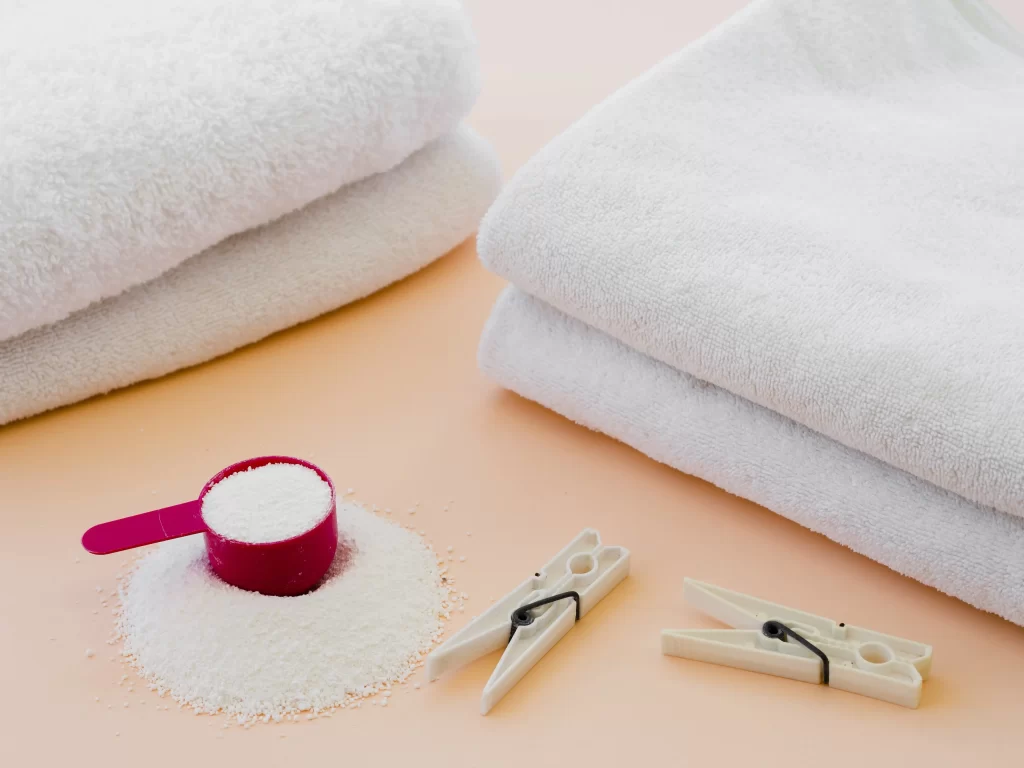
1. Baking Soda: Gentle All-Purpose Whitener
Purpose – Brightens whites, lifts light stains, and neutralizes odors.
Benefits:
- Mildly abrasive, thus it loosens without damaging fibers.
- Safe on most fabrics.
- Contributes to eliminating musty or sour smells.
Method of Use:
Pre-treatment of stains: Mix four tablespoons of baking soda with 1/4 cup of water to make a paste. Apply to stains, rub in gently, and leave for 30 minutes before washing.
Soaking Method: Mix 1 cup of baking soda in a bucket or tub of warm water. Leave them soaking for 2 to 6 hours before washing.
Laundry booster: Add ½ cup of baking soda into the washing machine along with the regular detergent.
2. Hydrogen Peroxide: For Tough Stains and Dingy Whites
Purpose: Natural oxygen bleach to remove deep stains and yellowing.
Benefits:
- Good for sweat stains, food stains, and yellow marks.
- Less harsh than chlorine bleach.
- Breaks down into water and oxygen.
How to Use:
- Fabric safety first. Check on a hidden area before using it on delicate fabric.
- Combine 3% hydrogen peroxide and water in equal parts.
- Apply diluted solution directly to stains, let sit for 15-30 minutes, and rinse.
- Add 1 cup of hydrogen peroxide to the wash cycle (instead of bleach) for whitening loads.
3. Lemon Juice: Natural Brightener and Deodoriser
Purpose – Citric acid is used as a natural bleaching agent to freshen white fabrics.
Benefits:
- Natural brightener of whites.
- Excellent in odor removal.
- Leaves a freshly cleaned smell.
How to Use:
- Add ½-1 cup of lemon juice to a tub of hot water.
- Whites are soaked in this solution for 1-2 hours and washed thereafter.
- For an added whitening factor, dry in direct sunlight after washing.
- Don’t ever use lemon juice on any colored or patterned fabric, as it is likely to cause fading.
4. White Vinegar: Effective Against Residue and Yellowing
Purpose – Removes detergent buildup that leads to dullness and yellowing.
Benefits:
- Softens fabrics, naturally.
- Prevents yellowing from occurring over time.
- Other features: reduces static cling and odors.
How to Use:
- Soaking: 1 cup of white vinegar is added to a bucket of warm water, and the whites are soaked for 1-2 hours, then washed.
- Rinse cycle: ½-1 cup of white vinegar in the fabric softener pocket during the rinse cycle.
5. Borax: For Deep Cleaning Heavily Soiled Clothes
Borax enhances the detergent’s working power for deep cleaning and whitening.
Benefits:
- Excellent for severely stained or dingy whites.
- Repels odor much better.
- Helps break down the most stubborn grime.
How to Use:
- Handling safety: Wear gloves and avoid inhaling the powder.
- Soaking: Dissolve ½ cup of borax in warm water, then soak the clothes for 4-6 hours before washing for deep whitening.
- Laundry Booster: Add ½ cup of borax directly into the tub with detergent.
Also Read – Want to know how to get stains out of whites? Read our blog to get the details.
How to Whiten Clothes That Have Yellowed Naturally
How to whiten clothes with vinegar offers a natural way to treat yellowed outfits. It requires a step-by-step guide so you don’t make a mistake, like damaging your clothes.
Here’s how you can treat white clothes that turn yellow.
Step 1: Identify the Type of Fabric
First, check the care label to see how well a particular fabric withstands cleaning method. Natural methods work well on cotton and linen; synthetic blends like silk, wool, and lace will be damaged.
Step 2: Pre-Soak to Loosen Yellowing
Fill a large basin or tub with ample lukewarm water and allow a natural soaking agent, such as a half cup of baking soda or a cup of white vinegar, to mix. These items of clothing may have stains from sheer sweat, detergent residue, or mineral tarnish; therefore, it is essential to soak them to break the bond.
Step 3: Treat Yellowed Areas Directly
Treat sticky areas directly with a targeted treatment where yellowing is more concentrated: underarms, points of fold such as collars, and cuffs. With a bit of water, the baking soda is made into a thick paste, which should be gently worked into the fabric with the fingers or a soft brush. You can also pour a diluted vinegar solution onto the stain using the same application procedure.
Step 4: Wash With a Natural Brightening Boost
After soaking and spot-treating, it’s time to wash. Towels usually handle machine washing well, while everyday clothing may need gentler care depending on the fabric. Use a mild detergent as directed on the care label, then boost the wash by adding baking soda with the clothes or pouring white vinegar into the rinse cycle.
Step 5: Sun-Dry for Natural Whitening
Once the fabric has been treated and washed, let it air-dry outdoors in daylight. Sunlight works as a natural brightener, helping lift lingering discoloration while discouraging the bacteria that cause unpleasant odors.
Also Read – Looking to get your clothes washed at affordable pricing? Visit our website for details.
How to Make Clothes White Again After Colour Bleeding
Clothes that bleed color can ruin their own appearance and damage other fabrics when washed together. Without a proper restoration process, the stains may become permanent.
When this happens, you can restore the fabric and protect your detergent’s cleaning power by acting quickly, soaking the garment in a mild laundry detergent, and using oxygen-based bleach when the care label allows it.
Handled the right way, the color transfer fades, the fabric regains its original brightness, and your clothes stay stronger for longer rather than showing lasting signs of color bleeding.
Step-by-Step Routine for Washing Whites Without Bleach
Following a routine for how to whiten clothes with vinegar instead of bleach requires proper steps to prevent mistakes or damage to clothes.
Choose the Right Detergent
Choose a potent formulation for whites that uses oxygen-based brighteners. Brighteners lift stains and make whites brighter, without the harshness of chlorine bleach.
Add Natural or Gentle Boosters
- Baking soda (½ cup) to neutralize odors and soften water.
- Washing soda (¼ cup) to break down heavy soil.
- Oxygen bleach (colour-safe) for deep cleaning without yellowing.
Don’t Overload the Machine
Allow whites enough room to circulate freely. Proper agitation helps detergents and boosters work much better.
Dry the Right Way
Air-dry when possible, but avoid direct sunlight to naturally brighten whites unless you choose the lemon juice method. When using a dryer, do not over-dry, as over-drying can set stains and make fabrics yellow.
Common Mistakes That Make Whites Look Dull
Make sure to stay away from these very daily washing habits that slowly ruin white:
- Washing whites along with coloured or off-white ones.
- Leaving too much detergent, which, again, leaves residue and holds dirt.
- An overloaded washing machine hinders proper cleaning.
- Not pre-treating stains before washing.
- Depend entirely on cold water, even for the severest of stains or oily buildup.
- Using fabric softener often coats fibers, leaving whites lustreless.
- Drying whites in extremely high temperatures gradually yellows them.
Quick Fixes Using Store-Cupboard Items
Household items used every day can ruin your whites if misused. But instead of panicking, here are some quick fixes you can opt for to maintain your clothes.
Salt
Add ¼ cup of salt to the wash to help prevent fading and brighten dingy whites. Best on lightly-used garments.
Aspirin
Crush 4-5 uncoated aspirin tablets and dissolve in warm water. Soak whites for 6-8 hours before washing to mitigate yellowing.
Dish Soap
Apply a few drops of grease-cutting dish soap directly to oily stains, especially on collars, cuffs, and underarms. Gently rub, rinse, and wash normally.
Ground Coffee
Add 1 to the rinse cycle as a last-minute magic trick to help derail detergent residue, soften fabrics, and brighten.
Hydrogen Peroxide (3%)
Use 1 cup in place of bleach for whites. Add to the wash or use as a spot treatment. Always test on an inconspicuous area first.

FAQs – How to Whiten Clothes
How to whiten laundry without using bleach?
The best way to whiten your laundry without using bleach is with alternatives like baking soda and white vinegar. Add them to your washing procedure and use the amount required for the fabric to whiten your clothes without causing damage.
How to naturally whiten your laundry?
Using natural household ingredients is an effective way to whiten your laundry without hurdles. For instance, if you use baking soda to clean your clothes, it’ll remove the stains and restore their brightness, making them look just like a new pair.
Can vinegar whiten clothes?
You can use white vinegar to whiten clothes, as it’s the best natural cleaner for stubborn odours and helps whiten fabric easily. Add half a cup of vinegar to the rinsing cycle, and the results of the cleaning will satisfy you.
Let’s Whiten Clothes Naturally
After learning the technique on how to whiten clothes, you won’t face hurdles and delays the next time you wash your outfits. Opting for natural cleaners like lemon juice and baking soda will save you time and deliver the results you always want.
Furthermore, avoiding common mistakes, such as overusing detergent and using cold water for heavy stains, will help prevent further damage to your clothes. This way, you can take the stains out of white clothes without any problem. For more details, you can contact our customer service team to have your queries answered.