

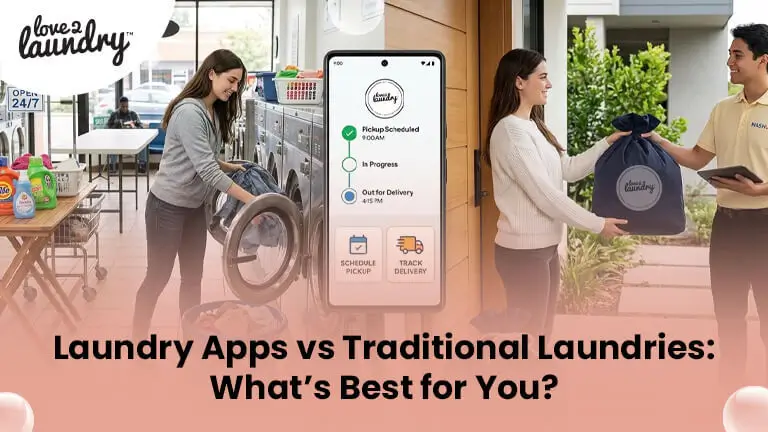
Laundry Apps vs Traditional Laundries: What’s Best for You?
In 2026, the battle between convenience and tradition will completely redefine how we handle our chores. Choosing between laundry apps vs traditional laundries is no longer just about clean clothes; it is about reclaiming your time in a fast-paced world. For decades, the local laundromat was the only choice for those without a home machine. However, the rise of the on-demand economy has introduced mobile laundry apps that bring the entire facility to your smartphone.
This shift has created a massive divide in the market. Some people still enjoy the control and lower costs of visiting a shop in person. Others cannot imagine life without the ease of a digital interface that handles everything from pickup to folding. Understanding the core differences in service, technology, and pricing is essential for any modern household. Whether you’re a busy professional or a parent managing a large family, your choice will impact both your weekly schedule and your budget. This guide explores the detailed pros and cons of laundry apps vs traditional laundries to help you decide which model fits your current lifestyle best.
Understanding Traditional Laundry Services
Before the digital revolution, traditional laundry services were the backbone of urban garment care. These businesses rely on physical storefronts where the relationship between the cleaner and the customer is built over years of face-to-face interaction. While they lack the flashy interfaces of modern tech, they offer a tactile and immediate service that many still find comforting.
What Is a Traditional Laundry?
Traditional laundry services refer to physical “brick-and-mortar” businesses where customers typically bring their garments for cleaning. These include local laundromats, neighbourhood dry cleaners, and family-owned wash-and-fold shops. These establishments rely on a physical presence in the community. They serve as a reliable staple for residents who prefer face-to-face interaction and immediate physical control over their items.
How Traditional Laundries Work?
The process begins when you gather your laundry and transport it to the shop. You speak directly with a staff member to explain specific needs. They tag your clothes and give you a paper receipt. Once the cleaning is finished, you must return to the shop during its operating hours to pay and collect your items. It is a manual, location-dependent cycle that has remained largely unchanged for fifty years.
Pros of Traditional Laundries
Direct Communication: You can point out a specific coffee stain to the person who will actually wash the shirt.
Lower Immediate Costs: Walk-in services are often more affordable because they don’t include delivery fees, making them ideal for those on a tight budget.
Trust and Reliability: Many people feel safer knowing exactly where their clothes are being kept.
Cons of Traditional Laundries
Time-Consuming: You lose hours commuting and waiting for machines.
Inflexible Hours: Most shops close early in the evening, making it hard for office workers to pick up their orders.
Difficult Tracking: Losing your paper ticket can make retrieving your clothes a major headache.

What Are Laundry Apps and How Do They Work?
The landscape of domestic work changed forever with the rise of the on-demand service model. Laundry apps act as a bridge between your front door and high-tech cleaning facilities. By eliminating the need for physical visits, these platforms prioritise your schedule, making laundry almost effortless.
What Is a Laundry App?
A laundry app is a digital platform that connects users with professional cleaning facilities. It serves as a logistics layer, managing the movement of clothes from your door to the cleaning plant and back. These online laundry services eliminate the need for you to visit a physical shop.
Step-by-Step: How Laundry Apps Work
Laundry apps are designed for speed:
- Download and Profile: Sign up and enter your address and payment details.
- Schedule: Choose a specific time window for a driver to pick up your laundry.
- Pickup: A professional driver collects your items in specialised bags.
- Cleaning: Clothes are taken to a facility where professional laundry services are applied according to your app settings.
- Delivery: Your fresh, folded clothes are returned within 24 to 48 hours.
Popular Features of Laundry Apps
Modern laundry apps offer benefits that traditional shops can’t match. These include real-time GPS tracking of your driver and AI-powered fabric recognition. Many apps also feature ‘photo-tagging,’ taking pictures of your items upon arrival to ensure nothing is lost. Personalised profiles let you save your preferred detergent or ironing settings for every future order.
Laundry Apps vs Traditional Laundries (Side-by-Side Comparison)
Choosing the right service requires a clear look at how each model performs across the most important categories of garment care. While both laundry apps vs traditional laundries aim to provide clean clothes, their methods of delivery and user interaction are vastly different. In 2026, the choice often boils down to whether you prefer a high-tech, hands-off approach or a personal, manual one.
Convenience
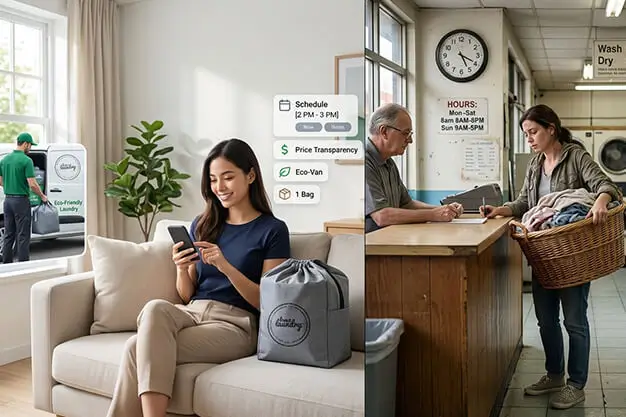
When comparing laundry apps vs traditional laundries, convenience is the biggest factor. Apps win by a landslide because they offer laundry pickup and delivery. You do not have to leave your house or carry heavy bags. Traditional laundry services require you to plan your day around their location and hours.
Pricing & Transparency
Apps usually display a clear price list before booking, showing the total cost, including any service fees. In contrast, traditional shops may have hidden costs or inconsistent pricing, often at the clerk’s discretion. However, the convenience of laundry apps often comes with a delivery surcharge.
Quality & Professional Care
Both options provide professional laundry services. However, apps often use larger, industrial-grade machines that tend to be gentler on clothes than the older machines in local laundromats. Traditional shops rely on the individual skills of their staff, which can vary greatly from one location to another.
Turnaround Time
Traditional shops can sometimes offer “same-day” service if you drop off early enough. Most online laundry services default to a 24-hour turnaround because of the logistics of the driver’s route. If you’re in a rush, the local shop might be faster, but it requires more effort on your part.
Eco-Friendly Practices
In 2026, eco-friendly laundry services are a major selling point. Apps like Love2Laundry use high-capacity machines that consume less water per pound of clothing. They also use electric vans for laundry pickup and delivery to reduce carbon footprints. Local laundries often use older, less efficient machines that waste more energy.
Which Option Is Best for Different Lifestyles?
Modern living is not a one-size-fits-all experience, and neither is the way we handle our chores. Your daily schedule, household size, and career demands play a massive role in whether laundry apps vs traditional laundries will serve you better. While a student might prioritise the lowest possible price, a business owner or a parent may find that the time saved by using mobile laundry apps is worth every penny.
For Busy Professionals
For busy professionals, laundry apps are the clear winner. You can schedule a pickup at 8:00 PM, right when you’re home. This eliminates the stress of rushing to a shop before it closes at 6:00 PM.
For Families
Families with piles of laundry benefit greatly from pickup and delivery services. Instead of spending an entire Saturday at the laundromat, parents can use online laundry services to manage bulk loads, giving them back their weekends.
For Students
Students living in dorms often find mobile laundry apps helpful when campus machines are out of order. Some apps even offer student discounts, making the service a cost-effective alternative to coin-operated machines.
For Businesses & Airbnb Hosts
For businesses needing commercial laundry support, apps provide a digital trail that is perfect for accounting. Airbnb hosts can automate their turnover by scheduling pickups exactly when guests check out.
Are Laundry Apps Really More Expensive?
The perceived cost of a service often differs from its actual value when you factor in time and resources. While many assume that high-tech solutions come with a hefty price tag, the reality of laundry apps versus traditional laundry pricing is more nuanced. When you account for transportation costs and the hours lost to manual washing, the digital route often proves to be surprisingly economical for the average user.
Safety, Hygiene, and Fabric Care
Entrusting your wardrobe to others requires confidence in their sanitation and handling protocols. Whether you choose laundry apps or traditional laundries, fabric safety is paramount. Modern facilities now follow medical-grade hygiene standards and use advanced tracking systems to ensure that every garment is returned in better condition.
Fabric Sorting & Washing Standards
Professional facilities used by apps follow strict sorting protocols. Sensors check fabric weight and type to ensure your wool sweater is never washed with heavy denim.
Hygiene & Cleanliness
Hygiene is a top priority for online laundry services. Machines are sanitised between loads to prevent cross-contamination. In contrast, traditional laundromats may harbour lingering bacteria if the machines aren’t cleaned daily by the owner.
Order Security & Tracking
With laundry apps, every garment is tracked via a barcode or QR code, minimising the risk of losing items. You also receive notifications at every stage, providing peace of mind that traditional laundry services can’t offer.
Why Many Customers Prefer a Hybrid Solution Like Love2Laundry
The market is shifting toward providers that combine digital ease with expert craftsmanship. Many users now choose Love2Laundry because it blends the trust of an expert cleaner with the power of modern technology. They offer the flexibility of laundry apps while maintaining the high-quality standards of a dedicated facility. With Love2Laundry, you get the best of both worlds: a local touch with a global digital standard. Their focus on both commercial and residential laundry needs makes them a versatile choice for everyone.
FAQs – Laundry Apps vs Traditional Laundries
Are laundry apps safe for delicate clothes?
Most top-tier applications let you set specific fabric care instructions for each item you send. Their facilities use specialised cycles and gentle detergents specifically designed to protect fragile materials.
Do laundry apps cost more than local laundries?
While the base price may be slightly higher, you often save money by avoiding travel costs and benefiting from bulk-use discounts. Subscriptions typically keep total monthly expenses similar to those of traditional walk-in shops.
What if I have special washing instructions?
The digital interface allows you to add detailed notes or select ‘hypoallergenic’ and ‘air-dry’ options for your order. These preferences are saved in your profile to ensure consistent results each time.
Laundry Apps or Traditional Laundries?
Deciding between laundry apps and traditional laundries depends on your personal priorities. If you enjoy routine and want the lowest price, a traditional local shop is still a solid choice. However, for most people in 2026, the benefits of laundry pickup and delivery are too good to ignore. Managing chores through a screen saves hours of physical labour each week.
Services like Love2Laundry have proven that you do not have to sacrifice quality for a digital experience. As technology continues to improve, the gap in convenience only grows wider. For those who value their freedom and want a stress-free home life, switching to an app is a logical step forward. Ultimately, laundry apps vs traditional laundries is a choice between manual labour and modern efficiency.