
Managing High-Volume Linen Treatment : Best Practices for Busy Facilities
In busy sectors like healthcare and hospitality, commercial linen operations present a uniquely complex set of challenges. Facilities such as hospitals and spas handle large quantities of sheets and towels daily. Without a solid plan, this workload can quickly lead to operational bottlenecks.
Effective bulk linen management ensures that clean supplies are always ready for patients or guests. It also protects the facility from hygiene risks and high replacement costs. A complete guide to linen management explores how to handle these demands effectively.
By focusing on smart sorting and professional equipment, managers can improve their daily workflow. Whether you manage a hospital laundry room or are scaling up operations across multiple Airbnb properties, professional outsourcing bridges the gap between demand and capacity. Balancing speed with care is the secret to success in any high-traffic environment.
Understanding the Challenges of High-Volume Linen Management
Large facilities face unique hurdles when running large-scale laundry operations. Time constraints are the most common issue. Staff often struggle to keep up with the constant cycle of washing and folding. This pressure can lead to shortcuts that compromise hygiene. Cross-contamination is a significant risk in clinics and hospitals. If soiled items are not handled correctly, infections can spread.
Wear and tear also accelerate in high-use environments. Frequent washing at high temperatures thins out fabrics over time, which is why maintaining impeccable linen presentation becomes harder without a structured care routine. High turnover leads to rising operational costs as linens need frequent replacement. In hotels, a shortage of towels delays room readiness. In hospitals, a lack of gowns can stall patient admissions. These inefficiencies hurt both the facility’s budget and its reputation.
Sorting and Organising Linen Efficiently
Proper sorting is the foundation of high-volume linen management. It prevents damage and ensures every item gets the right level of cleaning. Mixing delicate spa robes with heavy bath mats is a recipe for disaster. Staff should sort items by fabric type and weight first. This ensures that drying times are consistent across the load.
Sorting by soil level is equally important. Heavily stained items need pre-treatment or longer wash cycles. By separating these early, you avoid re-washing entire loads. A streamlined sorting process minimises human error during busy shifts. It also makes the transition to the washing phase much faster. Organised piles allow the laundry team to visualise the remaining workload easily.
Creating a Colour-Coded or Category-Based System
A colour-coded system is a brilliant way to simplify managing high-volume linen treatment. Using different coloured bags or bins for specific items reduces confusion. For example, red bags might hold infectious medical linens. Blue bins could be for standard towels. This visual guide helps staff work faster without needing constant supervision.
Labels are another effective tool. Clear signage on carts and shelves prevents clean items from being placed in dirty zones. This setup is a core part of linen management in healthcare. It stops cross-contamination before it starts. Labelled categories also help in tracking inventory. When everything has a specific place, it is easier to see which supplies are running low. This prevents the panic of running out of stock during peak hours.
Choosing the Right Equipment and Supplies for High-Volume Loads
Standard machines cannot handle the demands of high-volume linen management. Commercial-grade washers are built for 24/7 operation. They feature heavy-duty motors and larger drums to handle bulk loads. Using the right detergents is also critical. Professional-grade formulas break down oils and biological stains more effectively than domestic soaps.
Temperature management is a key factor in hygiene. Most linens treatments require high heat to kill bacteria. However, consistent high heat can damage fibres. Modern commercial machines offer precise controls to balance sanitation with fabric care. Using automated dosing systems ensures the exact amount of chemical is used. This saves money and protects the environment from excess waste.
Investing in Durable, High-Capacity Machines
High-capacity machines are the backbone of high-volume linen management in healthcare or other sectors. They allow staff to process more items in fewer cycles. This significantly reduces energy and water consumption. Larger dryers also prevent fabric bunching, which leads to fewer wrinkles.
These machines often come with programmable cycles. You can set specific parameters for different linen types. This level of customisation protects the quality of expensive fabrics. Investing in durable equipment reduces downtime caused by repairs. For a busy hotel or clinic, a broken machine is a major crisis. Reliable hardware ensures the laundry flow never stops.
Implementing Hygienic and Safety Protocols
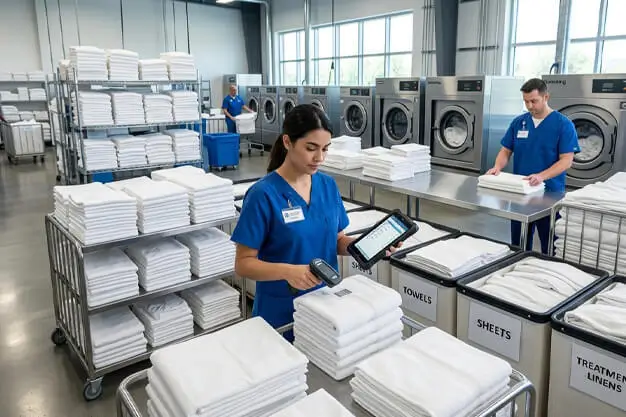
Maintaining high standards is essential when managing high-volume linen treatment. In medical settings, following a hospital laundry policy and procedures is mandatory. These rules protect both the patients and the staff from pathogens. Every person handling linen must be trained in safety protocols. This includes the correct use of personal protective equipment.
Safety goes beyond just washing. It involves the entire lifecycle of the linen. Hand hygiene stations should be placed near all laundry entry and exit points. Regular surface cleaning of the laundry room prevents the buildup of dust and bacteria. Documentation of wash temperatures and chemical concentrations is also helpful. It provides a record of compliance for health inspectors.
Preventing Cross-Contamination Between Loads
Separating clean and dirty zones is a non-negotiable rule. Contaminated linen should never pass through areas where clean items are stored. This is a primary goal of linen and laundry management in hospitals. Using water-soluble bags for highly infectious items is a great tactic. These bags go straight into the machine, so staff never touch the soiled fabric.
Storage practices also matter. Clean linens should be kept in enclosed cabinets or covered carts. This protects them from airborne particles. Staff should never “hug” dirty linen against their uniforms while moving it. Small changes in handling habits make a massive difference in overall facility safety.
Scheduling and Workflow Optimisation
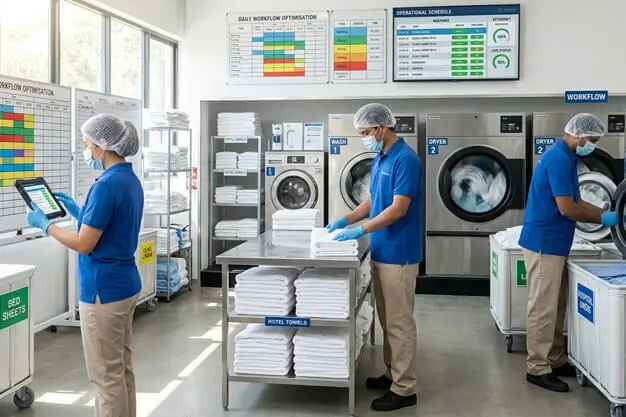
A chaotic laundry room is inefficient. Optimisation starts with a clear schedule. You should align laundry shifts with the times of highest demand. For a hotel, this is usually right after checkout. For a clinic, it might be at the end of the day. Using batch scheduling helps keep the machines running at full capacity without overloading them.
Inventory tracking is another piece of the puzzle. Performing regular audits of linen stocks helps you spot missing items early. It also reveals which items are wearing out the fastest. Checklists are useful for keeping staff accountable. They ensure that every step, from sorting to folding, is completed correctly. A well-oiled workflow reduces stress and keeps the facility running smoothly.
Leveraging Professional Laundry Services for Overflow or Speciality Needs
Sometimes, internal resources are not enough for managing large-scale linen operations. During seasonal peaks or equipment failure, outsourcing is a smart move. Love2Laundry supports B2B facilities across the UK, with the scale and expertise that on-site teams simply cannot replicate, backed by a fully electric pickup and delivery fleet running since we founded the business in 2014. We handle speciality fabrics requiring dry cleaning or delicate care, and our pricing is available online for a quick first estimate.
Identifying Tasks Best Suited for Outsourcing
Some tasks are better left to experts. Bulk washing of heavy blankets or curtains is a good candidate for outsourcing. These items take up too much space in smaller on-site machines. High-risk infectious linens might also be outsourced to specialised facilities. This removes the danger from your own building.
Delicate items, like silk pillowcases or branded uniforms, benefit from a professional touch. Outsourcing these frees up your staff to handle the daily “bread and butter” laundry. It prevents the laundry room from becoming a bottleneck. For more information about tailored services, contact us to discuss your facility’s specific needs.
Maintaining Linen Quality and Longevity
The goal of managing high-volume linen treatment is to extend its lifespan. Proper care starts with managing linen stocks wisely. Rotating your inventory ensures that the same set of sheets isn’t used and washed every single day. A “rest” period for fibres after drying helps them regain their shape. Effective linen management in healthcare requires strict adherence to sanitation standards to protect vulnerable patients.
Avoid over-drying, as it makes cotton brittle. Use fabric softeners sparingly, as they can reduce towels’ absorbency over time. Prompt stain removal is also key. The longer a stain sits, the harder it is to remove without harsh scrubbing. By following these simple steps, you can save thousands of pounds in replacement costs every year. Quality linens reflect the quality of your entire business.
FAQs – Managing High-Volume Linen Treatment
What should you not do when handling linen?
Do not shake dirty linens, as this releases germs into the air, and never carry soiled items against your body. Avoid mixing clean and dirty items in the same cart or storage area to prevent contamination.
What is the correct way to handle heavily soiled linen?
Place heavily soiled items in leak-proof, clearly labelled bags immediately at the point of use. Use gloves and protective gear to prevent skin contact with bodily fluids or harsh chemicals.
What is the safe management of linen in the NHS?
The NHS requires strict separation of clean, used, and infectious linens into colour-coded bags. All items must be washed at specific temperatures to ensure complete thermal disinfection and patient safety.
Conclusion: Streamlining Your High-Volume Linen Operations
Successfully managing high-volume linen treatment requires a mix of the right tools and strict habits. From the initial sorting to the final storage, every step affects your facility’s hygiene and budget. Implementing a linen policy for hospitals or high-end spas ensures that standards never slip. By investing in commercial equipment and managing linen stocks through audits, you protect your long-term investment.
Remember that you don’t have to do it all alone. Combining internal best practices with professional laundry and dry cleaning support provides the perfect balance of efficiency and quality. Start refining your workflow today to ensure a cleaner, safer environment for everyone.